Why Is Every Hearing Supplement Full of Blood-Pressure Herbs?
Quick Answer: Does Better Circulation Help Hearing?
The premise is real and the proof is not. The cochlea is fed by the labyrinthine artery, a single terminal vessel with no collateral supply, so it has less tolerance for reduced perfusion than almost any other tissue. Population studies do link cardiovascular risk factors with worse hearing thresholds. What is missing is the last step: no trial has shown that taking a circulation-supporting botanical changes anyone's audiogram.
- Solid: the cochlea has an end-artery supply and no backup.
- Suggestive: hypertension, smoking and diabetes track with hearing loss.
- Missing: a supplement trial with hearing as the measured outcome.
The anatomy that started it
Most organs have redundant blood supply. Block one vessel and a neighbouring one picks up some of the load. The inner ear does not work like that. The cochlea is supplied by the labyrinthine artery, usually a branch of the anterior inferior cerebellar artery, and it is a true end artery: there is no second route in. The stria vascularis, the tissue that maintains the electrical gradient the hair cells depend on, is metabolically expensive and sits at the end of that single line.
That is why sudden sensorineural hearing loss is treated as an emergency, and it is why almost every hearing supplement on the market reaches for circulation botanicals. The logic is not invented. It is just incomplete. The botanical that has been tested most directly against this exact premise is Ginkgo biloba, and the standardised extract trials we summarise in our review of the EGb 761 evidence for tinnitus are the closest thing this theory has to a proper test.
What the population data actually shows
Large cohort studies consistently find that the things which damage small blood vessels elsewhere — hypertension, diabetes, smoking, high cholesterol — are associated with worse hearing thresholds, particularly in the low frequencies where cochlear blood supply is thought to matter most. The association survives adjustment for age and noise exposure in most of these datasets.
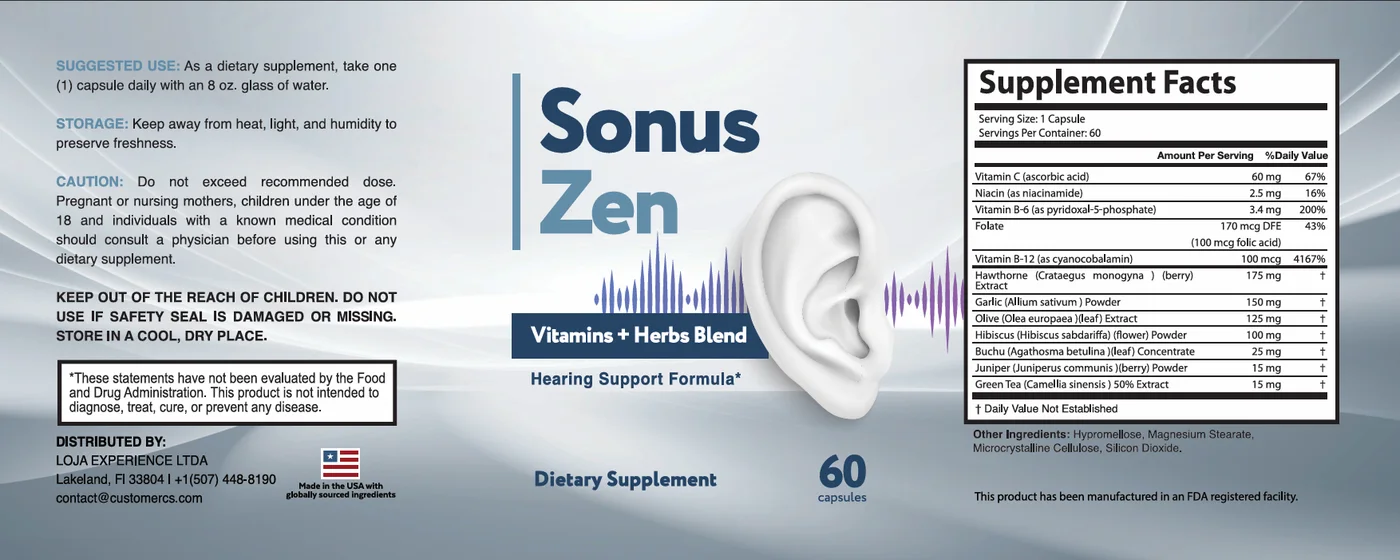
Association is where it stops. None of that tells you that improving a vascular risk factor reverses hearing loss, and it certainly does not tell you that 175 mg of hawthorn berry extract does anything measurable to cochlear perfusion. The same gap sits under the mineral arguments in this category: vascular tone is a plausible route, but as our magnesium glycinate dose guide sets out, the human trials that exist measured symptom scores rather than blood flow.
Where each botanical's evidence actually sits
| Ingredient | Best-supported use | Hearing evidence |
|---|---|---|
| Hawthorn berry | Cardiovascular tone, mild heart-failure symptoms | None direct |
| Garlic | Blood pressure, lipids, antiplatelet effect | None direct |
| Olive leaf | Blood pressure (oleuropein) | None direct |
| Hibiscus | Blood pressure — among the better botanical datasets | None direct |
| Folic acid | Homocysteine lowering | One 3-year RCT, low-frequency thresholds |
| Vitamin B-12 | Deficiency correction | Observational links only |
The one ingredient with a real hearing trial
Folic acid is the exception, and it is worth being precise about what it showed. A placebo-controlled trial in older Dutch adults with elevated homocysteine gave 800 mcg of folic acid daily for three years and found that the decline in low-frequency hearing was slower in the folic acid group. High-frequency hearing did not differ.
Three caveats matter before anyone treats that as a green light. The Netherlands did not fortify flour with folic acid, so participants started with lower folate status than a typical American does. The dose was 800 mcg — the panel on a formula like SonusZen carries 100 mcg of folic acid (170 mcg DFE). And the result was a slower decline, not a recovery.
How to read a hearing formula honestly
Ask three questions of any label. Does it contain an ingredient with a trial that measured hearing, rather than a mechanism that sounds plausible? Is the amount in the same order of magnitude as the trial that is being implied? And does the marketing claim restoration, which no supplement can do, rather than support, which is the honest framing?
On the first question most formulas score one ingredient. On the second, most fall short. On the third, a lot of this category fails outright — which is the actual reason to read the panel before the sales page. It is also why the ingredients with the least vascular story sometimes have the tidiest human data; sleep is the clearest example, and we walk through it in what melatonin does for ringing ears and sleep.
Medical note: tinnitus and hearing loss have causes that range from earwax to acoustic neuroma. Sudden hearing loss in one ear needs assessment within days, because the treatments that work are time-critical. Please see a clinician rather than starting a supplement.
Scientific references
Frequently asked questions
Does poor circulation cause hearing loss?
Reduced cochlear blood flow is one recognised contributor among many, because the cochlea is supplied by a single end artery with no collateral backup. Cardiovascular risk factors are associated with worse hearing thresholds in large cohort studies. That is an association; no trial has shown that improving circulation with a supplement reverses hearing loss.
Does hawthorn help hearing?
There is no direct evidence that hawthorn affects hearing. Hawthorn has been studied for cardiovascular tone and mild heart-failure symptoms, and hearing formulas include it on the assumption that better vascular function reaches the inner ear. Treat that as a mechanism, not a result.
Which hearing supplement ingredient has the best evidence?
Folic acid. A three-year placebo-controlled trial in older Dutch adults found a slower decline in low-frequency hearing with 800 mcg daily. The population had low dietary folate, the dose was much higher than most supplements carry, and the effect was slower decline rather than improvement.
Is sudden hearing loss an emergency?
Yes. Sudden sensorineural hearing loss, typically in one ear, should be assessed by a clinician within days because the treatments that help are time-critical. Do not wait to see whether a supplement makes a difference.
See how SonusZen puts this together
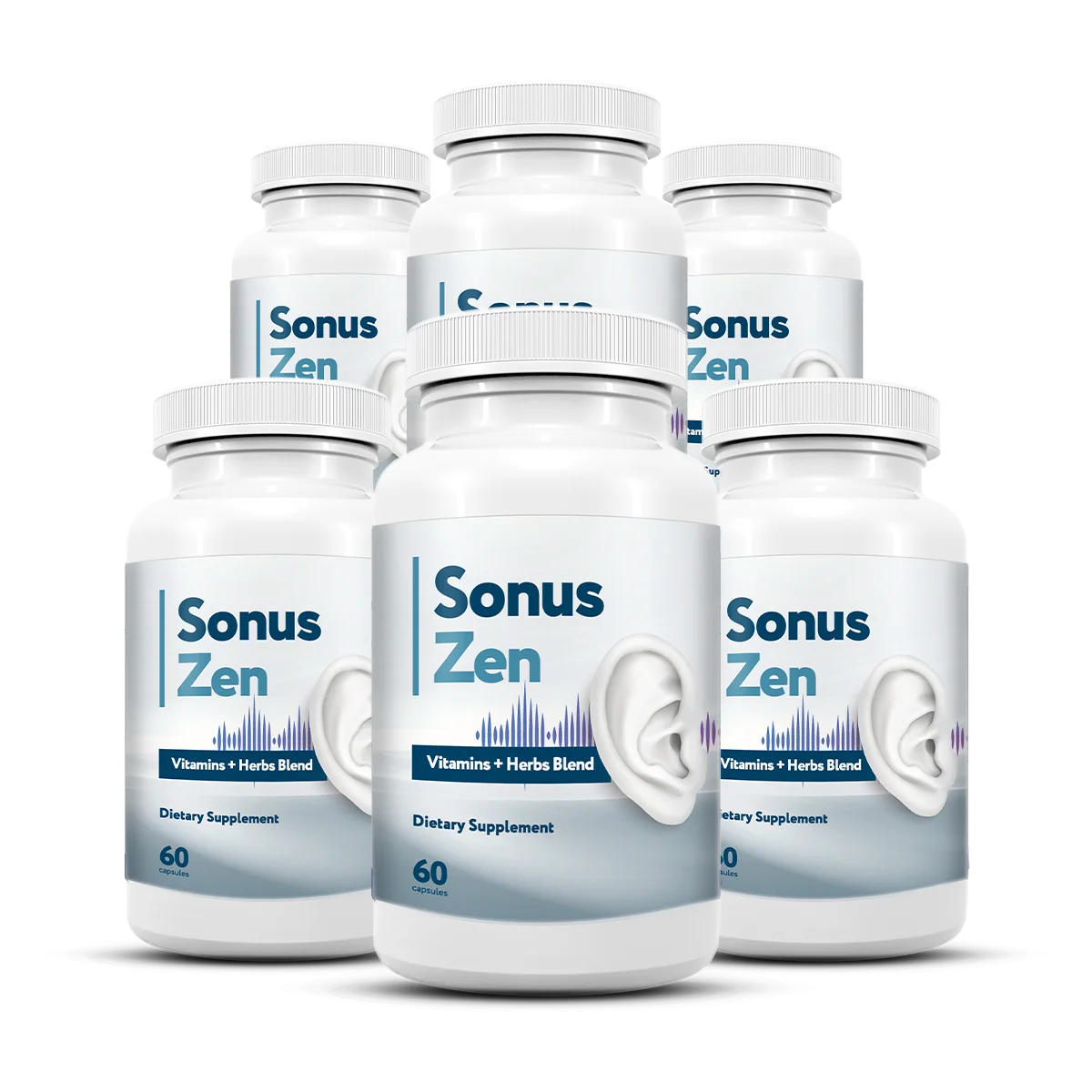
Five vitamins and seven botanicals in one daily capsule — with every amount from the label and the evidence behind each one laid out.
Read the SonusZen Review