Are There Any Supplements That Help Hearing Loss?
Quick Answer: Are There Any Supplements That Help Hearing Loss?
One ingredient has a placebo-controlled trial that measured hearing directly: folic acid, which slowed the decline in low-frequency hearing over three years in older adults who began with low folate status. Every other candidate — ginkgo, magnesium, zinc, antioxidants, N-acetylcysteine — rests on mechanism, animal work or small trials that disagree with each other. Nothing in this category has been shown to bring back hearing that is already gone.
- Best case: slowing a decline, in people who were short of a nutrient to begin with.
- Unproven: ginkgo, magnesium and antioxidant blends for existing hearing loss.
- Never: restoring lost hearing — hair cells do not regenerate in humans.
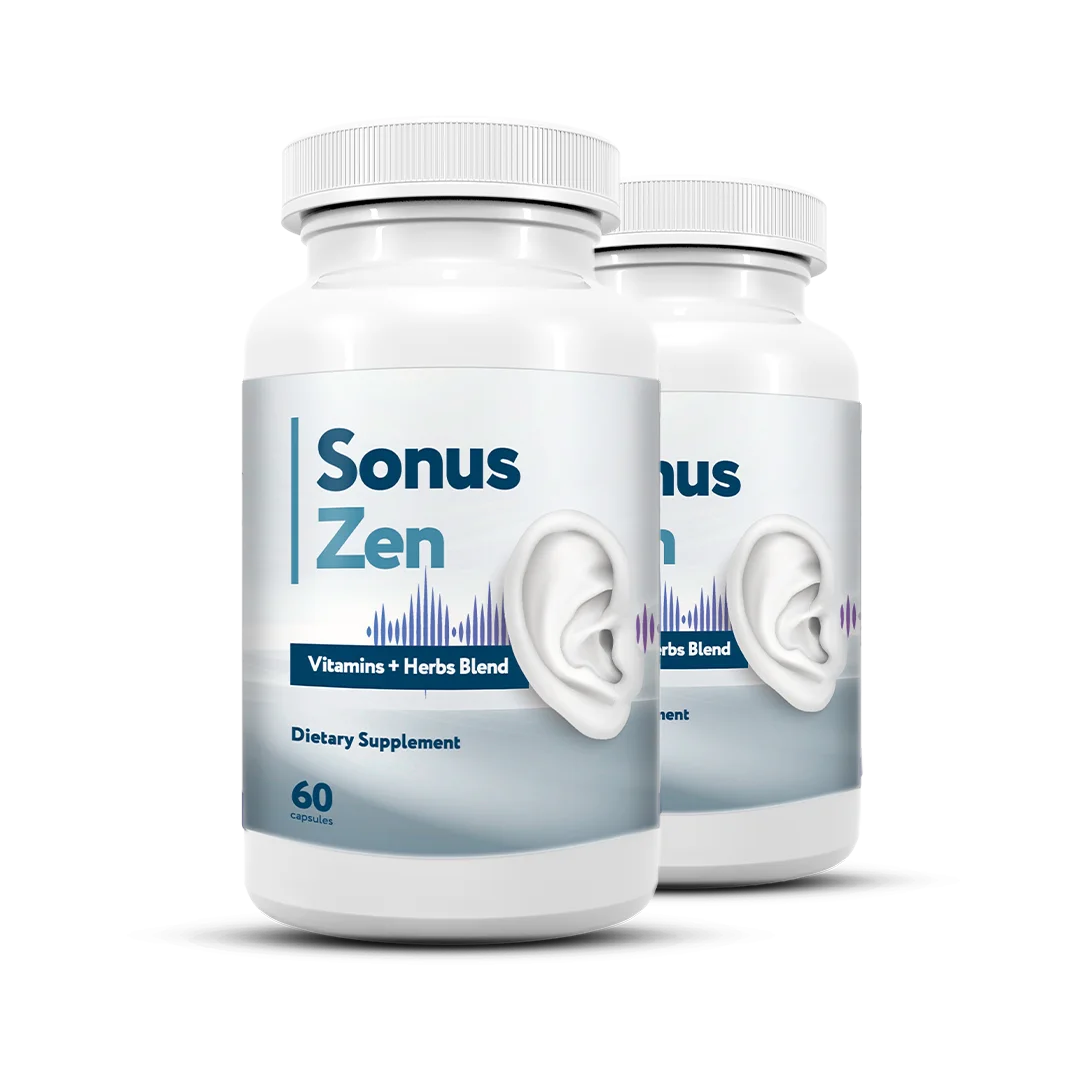
First, define what “help” is supposed to mean
Most arguments about this topic are really arguments about a word. “Help” can mean at least four different things, and the four have wildly different levels of support behind them.
Restoring hearing already lost. Nothing does this. Sensorineural hearing loss involves damage to cochlear hair cells and their supporting structures, and in humans those do not grow back. Any product page implying otherwise has told you everything you need to know about it.
Slowing a future decline. This is a legitimate research question and it is the only one where a supplement has ever produced a positive result with hearing as the measured endpoint.
Easing an associated symptom, usually tinnitus. Heavily studied, poorly settled. Tinnitus is rated on subjective scales that move for many reasons, which makes small trials unreliable.
Correcting a deficiency. Uncontroversial and genuinely worth doing — but it applies to people who are actually deficient, which is a much smaller group than the marketing implies.
Keeping those four apart is the whole trick. Nearly every overstated claim in this market comes from evidence for the fourth being presented as evidence for the first.
Folate: the one ingredient with a hearing trial behind it
A placebo-controlled trial in older Dutch adults with raised homocysteine gave 800 mcg of folic acid daily for three years and measured hearing thresholds at the end. The folic acid group showed a slower decline in low-frequency hearing than the placebo group. High-frequency hearing — the range that fails first in age-related hearing loss — showed no difference.
That is a genuine result and it is the single strongest piece of evidence in this entire category. It also comes with three caveats that matter enormously.
First, the Netherlands did not fortify flour with folic acid, so participants started from a lower folate status than a typical American does — this may have been deficiency correction rather than a general effect. Second, the dose was 800 mcg daily, which is far above what most combination hearing formulas carry. Third, the outcome was a slower rate of decline over three years, not an improvement. Nobody's hearing got better; one group's got worse more slowly.
The strongest evidence in the hearing-supplement category is a three-year trial in which the good news was that things deteriorated less quickly. That is the honest ceiling of what is on offer here.
Compare a formula against its own label
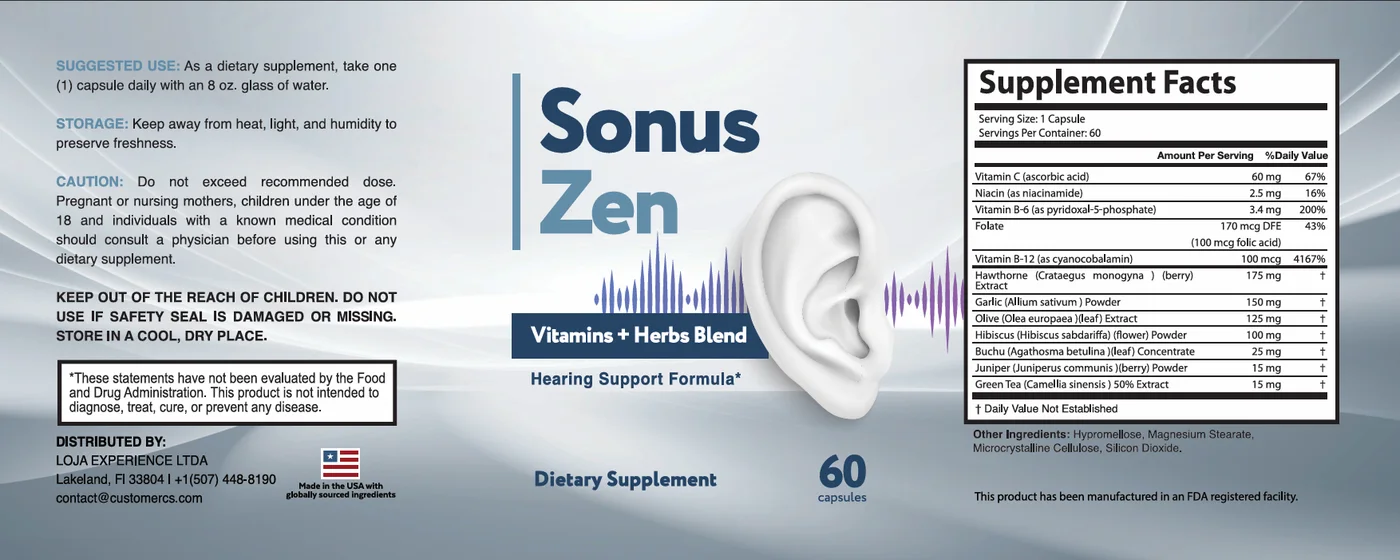
If you are trying to work out what supplements are good for hearing loss, the Supplement Facts panel answers more questions in thirty seconds than the sales copy does in ten minutes.
See the Official SonusZen OfferGinkgo biloba: the most-studied, least-conclusive candidate
Ginkgo biloba has been tested for tinnitus and for hearing more often than any other botanical, largely on the theory that it improves microcirculation. The results have never settled. Systematic assessments that separate people whose primary complaint is tinnitus from people who have tinnitus alongside dementia have generally failed to find a reliable benefit in the former group, and an effect on measured hearing thresholds has not been demonstrated at all.
There is also a safety footnote that gets left off product pages. Ginkgo has antiplatelet activity and is commonly flagged as a bleeding-risk concern for people taking anticoagulants or antiplatelet drugs, and for anyone with surgery scheduled. That is not a reason to panic; it is a reason to mention it to a pharmacist rather than assume “herbal” means “inert”.
Magnesium, zinc and the noise-protection studies
A different and more interesting line of research asks whether a nutrient taken before noise exposure can blunt the damage. Small studies in military recruits and in industrial settings have looked at magnesium and at N-acetylcysteine for temporary threshold shift after loud noise, with mixed and generally preliminary results. The samples are small, the exposures are hard to standardise, and the outcome measured is usually a temporary shift rather than permanent damage prevented.
Zinc is the other mineral that keeps appearing. It is genuinely concentrated in cochlear tissue, it is required for the copper-zinc antioxidant enzyme in the inner ear, and it has been trialled for tinnitus repeatedly — without producing a convincing result. We have gone through the doses, the safety ceiling and the trial record in detail in our piece on zinc, dose and safety for hearing. The pattern there is the pattern everywhere in this category: strong biology, weak human evidence.
The one thing that unambiguously protects hearing from noise costs a few dollars and goes in your ears. Earplugs and earmuffs have an effect size no supplement in this article comes close to, and they work the same day you buy them.
Antioxidants and the free-radical hypothesis
The mechanistic story behind most antioxidant hearing formulas is respectable. Cochlear hair cells are metabolically demanding and vulnerable to oxidative stress; animal models of noise damage and age-related decline show oxidative injury; antioxidants given to animals before noise exposure can reduce measurable damage. That is real laboratory science, not invention.
The translation to humans has been poor. Large trials of vitamin supplementation in older adults have not produced meaningful hearing benefits, and observational studies linking dietary antioxidant intake to hearing thresholds are confounded by everything that goes along with a better diet. Antioxidant capacity in a test tube has repeatedly failed to become a clinical result in people, across many organ systems, not just this one. The clearest illustration is the bioflavonoid-and-B-vitamin combination that has been sold for ear complaints since the 1960s; we traced its actual trial record in our examination of whether Lipoflavonoid works for tinnitus, and it is thinner than six decades of shelf presence would suggest.
Where each candidate's evidence actually sits
| Ingredient | Best human evidence | Outcome measured | Strength |
|---|---|---|---|
| Folic acid | 3-year placebo-controlled trial, older adults | Low-frequency threshold decline | Moderate, narrow |
| Vitamin B-12 | Observational associations with tinnitus and thresholds | Blood levels vs. hearing | Weak |
| Ginkgo biloba | Multiple trials, pooled assessments | Tinnitus severity scores | Weak / inconsistent |
| Zinc | Small randomised tinnitus trials | Tinnitus severity scores | Weak |
| Magnesium | Small noise-exposure studies | Temporary threshold shift | Preliminary |
| N-acetylcysteine | Small occupational and military studies | Temporary threshold shift | Preliminary |
| Antioxidant blends | Animal models; human data sparse | Cochlear damage markers | Mechanistic only |
| Hearing protection | Occupational health literature | Permanent threshold shift | Strong |
What no supplement in this category can do
Stated plainly, because the honest limits are the most useful part of any page like this one. No dietary supplement has been shown to reverse hearing loss, restore hair cells, replace a hearing aid, or fix a conductive problem such as impacted earwax, fluid behind the eardrum, otosclerosis or a perforation. None will undo noise damage that has already happened or counteract ototoxic medication.
Supplements also cannot substitute for a diagnosis. Hearing loss and tinnitus have causes that range from trivial to serious, and some of them are treatable in ways that matter. Sudden sensorineural hearing loss — a noticeable drop, usually in one ear, over hours to days — is a medical emergency where the effective treatments are time-critical. Hearing loss on one side only, hearing loss with dizziness, or hearing loss with ear pain or discharge all need a clinician rather than a capsule.
And no supplement can outperform the boring interventions. An audiogram, hearing aids where they are indicated, treating the middle ear, managing blood pressure and diabetes, and wearing hearing protection around loud noise are the things with real effect sizes attached to them.
Medical note: a sudden or one-sided drop in hearing needs assessment within days, not weeks. So does hearing loss accompanied by dizziness, ear pain or discharge. Nothing on this page is medical advice, and no supplement should be used in place of a hearing assessment.
A 60-second test for any hearing formula
Four questions will sort this entire shelf faster than reading a hundred product pages. Applying them to the best-known names is a useful exercise in itself, which is what we do in our side-by-side comparison of SonusZen, Tinnitus 911, Silencil and Quietum Plus — the panels differ far more than the sales pages do.
Does it contain an ingredient with a trial that measured hearing? On most labels the honest answer is one ingredient, or none. That is not automatically disqualifying, but it should reset your expectations.
Is the amount in the same range as the study being implied? This is where most formulas quietly fail. A formula that carries 100 mcg of folic acid is not delivering the 800 mcg the trial used, and saying so is not a technicality.
Does the page claim support or claim restoration? Support is a defensible framing for a dietary supplement. Restoration is not, and a page willing to say it will be willing to say anything.
Is there anything here that interacts with your medication? Circulation botanicals were chosen precisely because they act on the cardiovascular system, which is exactly why they can stack with cardiovascular drugs. Take the panel to a pharmacist.
Applied to SonusZen, that test gives a mixed and fairly typical result: one ingredient with a hearing trial, at a fraction of the trial dose, alongside a botanical blend whose evidence is cardiovascular rather than auditory. Anyone searching for the best supplement to improve hearing should run the same four questions against every competing label — and expect most of them to come out similarly.
Frequently asked questions
Are there any supplements that help hearing loss?
One ingredient has a placebo-controlled trial with hearing as the measured outcome: folic acid, which slowed the decline in low-frequency hearing over three years in older Dutch adults who started with low folate status. Everything else in the category rests on mechanism, animal work or small inconsistent trials. No supplement has been shown to restore hearing that is already lost.
Does ginkgo biloba help tinnitus or hearing?
Ginkgo biloba is the most-studied botanical in this space and the results remain inconsistent. Systematic assessments of ginkgo in people whose main complaint is tinnitus have not found a reliable benefit, and an effect on hearing thresholds has not been demonstrated. Ginkgo also carries a bleeding-risk caution alongside anticoagulant and antiplatelet medication.
Can vitamins reverse age-related hearing loss?
No. Age-related hearing loss involves the loss of cochlear hair cells and supporting structures, and those do not regenerate in humans. Correcting a genuine nutrient deficiency is worthwhile and nutrients support normal function, but no vitamin has been shown to bring back hearing that is already gone. Treat any page promising restoration as a warning sign.
How long would a hearing supplement need to be taken before anything showed?
Longer than most people expect. Nutrient status shifts over weeks rather than days, and the one folate trial that measured hearing ran for three years before reporting a difference in the rate of decline. Any product promising a noticeable change within days is not describing how these ingredients behave.
Scientific references
- NIDCD — Age-Related Hearing Loss (Presbycusis)
- NIDCD — Sudden Deafness (sudden sensorineural hearing loss)
- NIH Office of Dietary Supplements — Folate fact sheet for health professionals
- NIH NCCIH — Ginkgo
- PubMed — randomised controlled trials of dietary supplements and hearing loss
- Mayo Clinic — Hearing loss: symptoms and causes
See what is actually on the SonusZen panel
Every ingredient with its amount from the label, the evidence behind each one, and where to buy SonusZen through the official store rather than an unauthorised marketplace listing.
Check Availability and Pack Options