Vitamins for Tinnitus: Which Ones Actually Help, Ranked
Quick Answer: Which Vitamins for Tinnitus Actually Help?
The vitamins for tinnitus with real support are the ones that correct a genuine shortfall. Vitamin B12 has the clearest link when you are deficient; folate, vitamin D and the mineral zinc show weaker, mostly deficiency-driven signals; vitamin C is a supportive antioxidant. Fixing a measured deficiency helps far more than megadosing when your levels are already normal.
- Strongest: vitamin B12 — but chiefly in people who are low.
- Supportive: folate, vitamin D, zinc and antioxidant vitamin C.
- Rule: reach adequacy, respect upper limits, do not megadose.
Search for vitamins for tinnitus and you will find two extremes: pages promising that a single pill will silence the ringing, and forum threads insisting nothing works at all. The truth sits in between and is more useful than either. Some vitamins genuinely matter for the auditory system, a few have real if modest evidence, and the single biggest predictor of whether supplementing helps you is whether you were short of that nutrient to begin with. This guide ranks the candidates by the strength of their evidence and, just as importantly, tells you where the evidence runs out.
We are an independent publisher rather than the manufacturer, so we have no incentive to oversell. Where a vitamin is worth taking seriously we will say so, and where the hype outruns the data we will say that too.
Why vitamins for tinnitus is a fair question, not a gimmick
Tinnitus — the perception of ringing, buzzing or hissing with no external source — is not a disease in itself but a symptom, and it has many drivers: noise damage, age-related hearing loss, earwax, blood-pressure changes, certain medications and, relevant here, a handful of nutritional shortfalls. Because several vitamins are involved in nerve signalling, oxygen delivery and antioxidant defence inside the ear, it is biologically reasonable that being deficient in one of them could make ear-ringing more likely or more intense.
That is the legitimate core of the idea. The gimmick begins when a page takes “a deficiency can contribute” and inflates it into “this vitamin cures tinnitus for everyone.” Those are completely different claims. A nutrient being necessary tells you that too little causes trouble; it does not tell you that extra helps someone who already has enough. Keep that distinction in your head and most of the marketing in this category sorts itself out.
The vitamins for tinnitus with the strongest evidence, ranked
Here is the honest hierarchy, from the best-supported to the merely plausible. Note that two entries — zinc and, arguably, magnesium — are minerals rather than vitamins, but they come up so often in the same searches that leaving them out would be misleading.
| Nutrient | Evidence for tinnitus | Who it is most likely to help |
|---|---|---|
| Vitamin B12 | Strongest of a weak field; deficiency linked to tinnitus | People with low B12, especially with noise exposure |
| Folate (B9) | One long trial slowed hearing decline in low-folate adults | Older adults with low folate status |
| Vitamin D | Observational association with ear ringing | People who are vitamin D deficient |
| Zinc (mineral) | Mixed small trials; benefit mainly when zinc is low | People with a measured low zinc level |
| Vitamin C | Supportive antioxidant role; no direct tinnitus cure data | General antioxidant support, not a standalone fix |
Vitamin B12: the clearest link, and its limits
Vitamin B12 is the headline act, because it has the most direct connection to the nervous system and the most suggestive human data. B12 is essential for the myelin sheath that insulates nerves and for healthy nerve conduction, including along the auditory pathway. Studies have reported a higher rate of B12 deficiency among some people with persistent tinnitus, particularly those with a history of loud-noise exposure, and small studies have looked at whether replacing B12 in deficient people eases their symptoms.
The crucial qualifier is deficiency. B12 supplementation shows the most promise in people who are actually low, a group that includes many older adults, people on long-term acid-reducing medication, those following strict plant-based diets, and anyone with absorption problems. If your B12 is already comfortably in range, there is little reason to expect a high dose to quiet your ears. The sensible move is to check rather than guess; our deeper look at the Your Supplement Says 4,167% Daily Value of B-12. Should You Worry? walks through who is most at risk and what the studies really showed.
Folate: the one trial with hearing as the outcome
Folate, vitamin B9, earns its place for a specific reason: it is behind one of the few placebo-controlled trials in this whole category that used hearing itself as the measured outcome. In older Dutch adults with low folate status, folic acid supplementation over three years slowed the decline in low-frequency hearing compared with placebo. That is a genuine, if narrow, result — it applied to low-folate individuals, concerned the rate of hearing decline rather than tinnitus loudness, and took years to show. It is nonetheless one of the stronger data points in the field, and it fits the recurring theme that correcting a shortfall is where the action is.
Vitamin D: association, not proof
Vitamin D has become a popular suspect because observational studies have noted that people with tinnitus, and people with certain inner-ear conditions, tend to have lower vitamin D levels on average. Vitamin D receptors are present in the inner ear, which gives the idea a mechanism to hang on. But observational association is a long way from proof of cause; low vitamin D tracks with less time outdoors, older age and poorer general health, any of which could be doing the real work. It is still worth knowing your level, because vitamin D deficiency is common and worth correcting on its own merits. The nuance is covered in our piece on the vitamin D and ear ringing connection.
Prefer the relevant vitamins in one daily capsule?
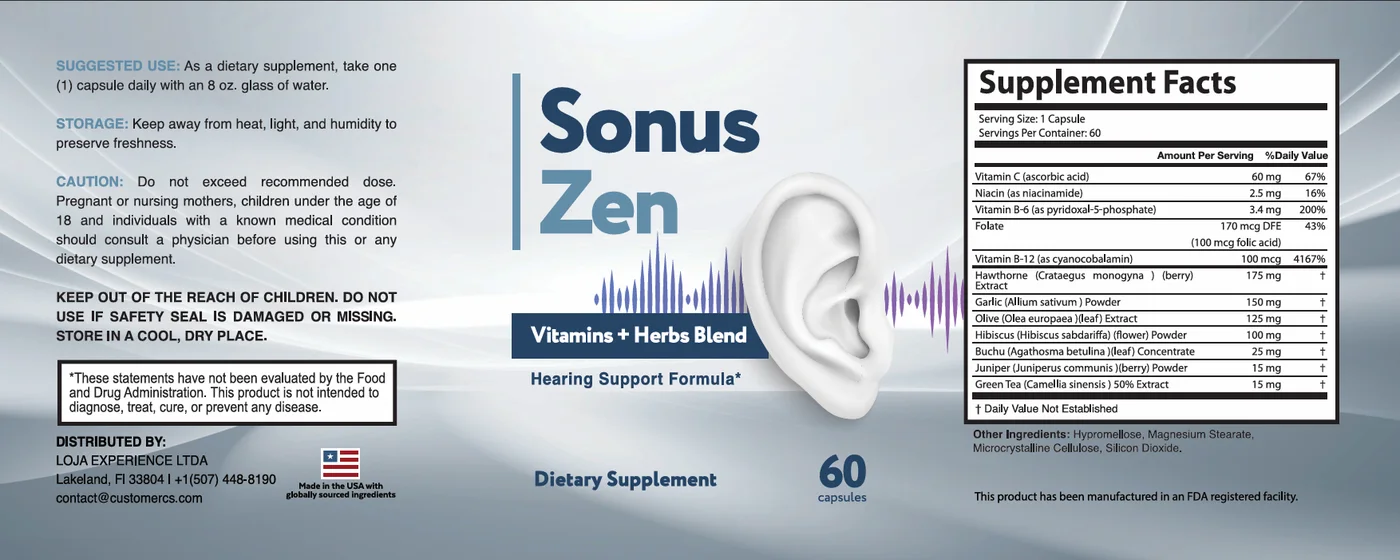
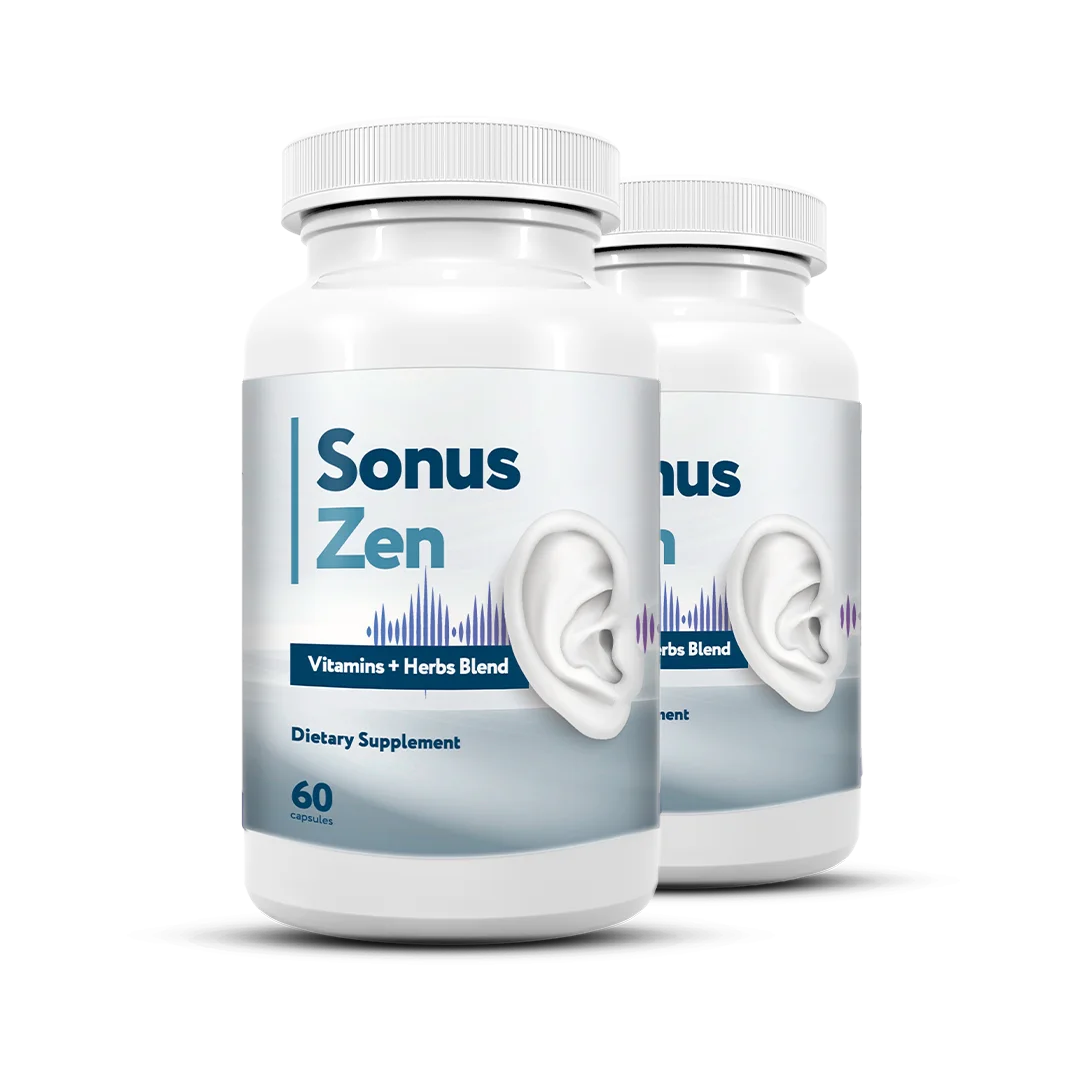
SonusZen combines vitamin C, folate, B-6 and B-12 with hearing-focused botanicals at label-stated amounts — steady support without assembling four separate bottles yourself.
See the SonusZen Formula & OfferZinc and the antioxidant vitamins
Zinc is a mineral, not a vitamin, but it dominates the same conversation. It concentrates in cochlear tissue and supports antioxidant enzymes there, and small trials have tested it for tinnitus. The pooled result is unconvincing except, once again, in people whose zinc status is low to begin with. If you want the full picture, including the copper problem that comes with overdoing it, see our detailed review of zinc for hearing loss, dose and safety. Vitamin C and other antioxidants (vitamin E, and compounds in green tea) play a supporting role by helping neutralise the oxidative stress implicated in noise and age-related ear damage, but no antioxidant vitamin has direct trial data showing it quiets established tinnitus. Treat them as background support, not a targeted fix.

The megadose myth: why more is not better
The most expensive mistake in this category is assuming that if a little of a vitamin helps a deficient person, a lot will help everyone more. Nutrients do not work like that. The dose-response curve for correcting a deficiency is steep at the bottom and flat at the top: once you have refilled the tank, additional amounts do nothing useful and, past a point, cause harm. That is why the ranking above keeps circling back to the same phrase — correcting a measured deficiency, not megadosing.
Megadosing carries real downsides, too, which the next objection covers. The practical takeaway is that the number to aim for is adequacy, confirmed where possible by a blood test, kept within the established upper intake levels. A sensible daily amount taken consistently for months beats a heroic dose taken erratically for a fortnight, every time.
Objection: shouldn’t I just take one targeted vitamin?
This is a fair challenge, and the answer depends on what you know about yourself. If a blood test has flagged one clear deficiency — say your B12 is genuinely low — then targeted correction of that single nutrient is the cleanest, cheapest and most logical response. Buy the one thing you are short of and fix it.
If you do not have a specific diagnosed gap but want steady nutritional support for hearing health generally, a combined formula becomes the more practical choice. Assembling B12, folate, B6, vitamin C and a couple of botanicals from separate bottles is fiddly, easy to abandon, and often works out no cheaper. A single daily capsule that supplies the relevant nutrients at reasonable amounts removes the friction that makes people quit by week two. Neither route is a magic bullet; the honest promise for both is support of normal function, judged over two to three months.
Objection: can too many vitamins make tinnitus worse?
Yes, and this deserves to be stated plainly because the megadose crowd rarely mentions it. Several nutrients turn harmful at high intakes. Long-term high-dose vitamin B6 can cause peripheral nerve symptoms — tingling and numbness — which is a genuine reason to respect its upper limit rather than pour it in. Excess zinc, sustained above 40 mg a day, blocks copper absorption and can create a copper deficiency of its own. The fat-soluble vitamins A and D accumulate in the body and become toxic at high doses, unlike the water-soluble vitamins your body can partly flush.
So the fear is not paranoia; it is a reason to be measured. The safe zone is reaching adequacy and staying inside the tolerable upper intake levels for each nutrient. A well-designed combined formula helps here, because it fixes the amounts at sensible levels rather than leaving you to stack doses that quietly add up. If you take several products, add up the overlapping nutrients across all of them — that is where people accidentally cross a limit.
How SonusZen approaches the vitamin question
Here is where a combined formula fits, stated honestly. SonusZen supplies vitamin C, niacin as niacinamide, vitamin B-6 as P5P, folate and vitamin B-12 — the cluster of vitamins that come up most in tinnitus discussions — alongside seven botanicals including hawthorn berry, garlic, olive leaf and hibiscus. The logic is the B-vitamin trio’s role in homocysteine metabolism and nerve health, plus the botanicals’ traditional association with circulation, on the reasoning that the inner ear depends on a delicate blood supply.
What we will not tell you is that this, or any formula, is proven to cure tinnitus — no supplement has cleared that bar, and any page claiming otherwise is a warning sign. What a combined formula reasonably offers is convenient, consistent delivery of the relevant vitamins at label amounts, which matters most if you suspect your intake has been patchy. Read the panel, check the numbers against the upper limits, and give any nutritional approach the two-to-three-month runway it needs before judging it. For a broader comparison of options, our best tinnitus supplement buyer’s guide for 2026 weighs the leading formulas side by side.
Frequently asked questions
Which vitamins are best for tinnitus?
The vitamins with the most support are the ones that fix a shortfall you actually have. Vitamin B12 has the clearest link, mainly in people who are deficient; folate has one long trial where it slowed hearing decline in low-folate older adults; vitamin D shows up in observational data on ear ringing; and vitamin C plays a supportive antioxidant role. None of them is a proven cure, and correcting a measured deficiency does far more than piling on high doses when your levels are already normal.
Can a vitamin deficiency cause ringing in the ears?
It can contribute. Low vitamin B12 is the best-documented example, and studies have found a higher rate of B12 deficiency in some people with persistent tinnitus, especially those with noise exposure. Low vitamin D and low zinc status have also been associated with tinnitus in observational research. Association is not proof of cause, but it means a blood test is a reasonable early step, because a genuine deficiency is worth correcting for many reasons beyond your ears.
Should I take a single vitamin or a combined formula for tinnitus?
If a blood test shows one specific deficiency, targeted correction of that single nutrient is the logical move. If you simply want steady nutritional support without a known single gap, a combined formula that supplies the relevant B-vitamins and antioxidants at sensible amounts is more convenient than juggling separate bottles. Either way the honest expectation is support of normal function, not a guaranteed reduction in ringing, and consistency over two to three months matters more than the format.
Can too many vitamins make tinnitus worse?
Yes, excess can backfire. High-dose vitamin B6 taken for long periods can cause nerve symptoms; too much zinc blocks copper absorption; and fat-soluble vitamins like A and D accumulate and become toxic at high intakes. More is not better once a deficiency is corrected. The goal is to reach adequacy and stay within the established upper limits, not to megadose in the hope that a larger number produces a larger effect.
Related reading
Scientific references
- NIH Office of Dietary Supplements — Vitamin B12 fact sheet
- NIH Office of Dietary Supplements — Folate fact sheet
- NIH Office of Dietary Supplements — Vitamin D fact sheet
- NIDCD — Tinnitus
- PubMed — vitamin B12 and tinnitus studies
- Harvard T.H. Chan School of Public Health — The Nutrition Source: Vitamins
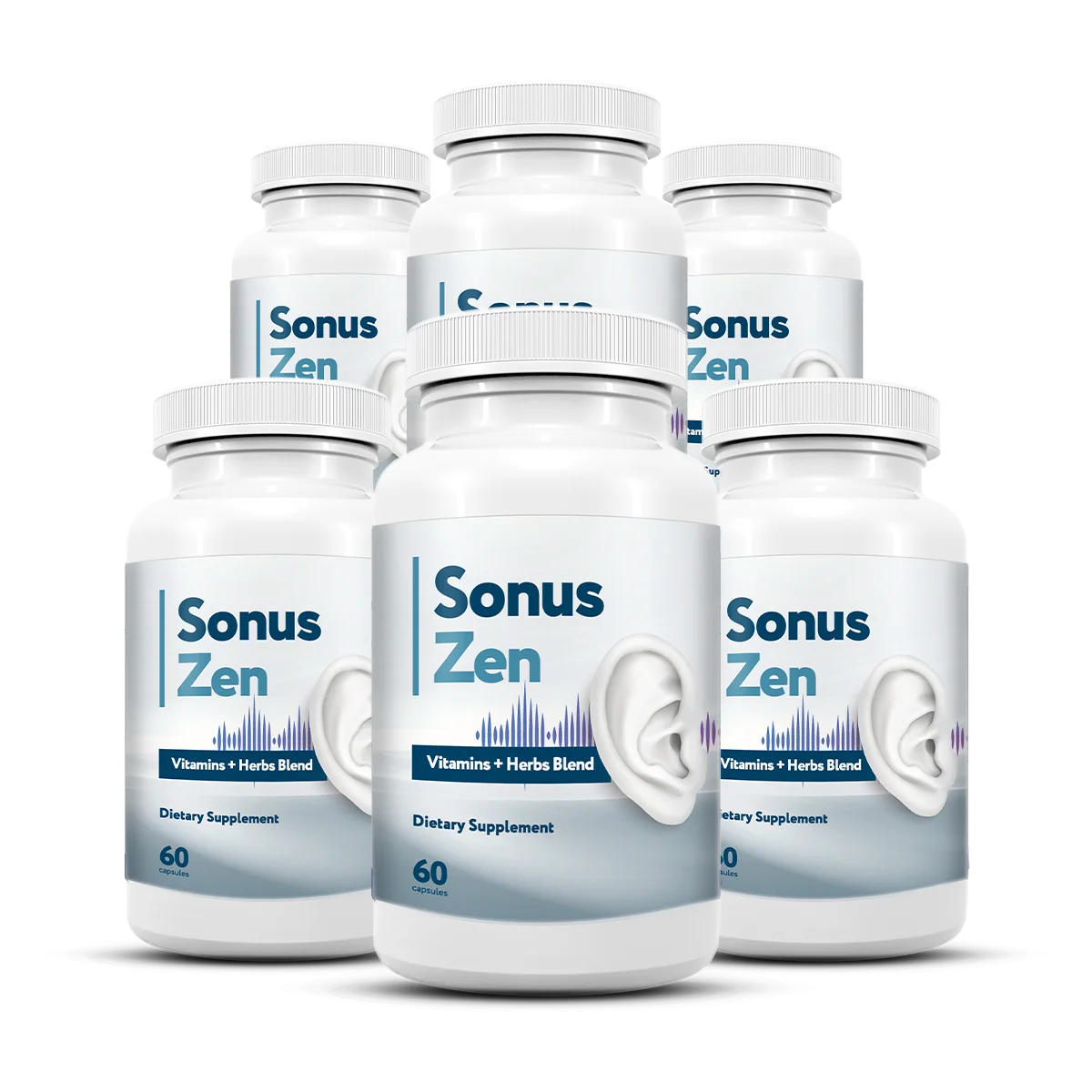
Get the relevant vitamins in one daily SonusZen capsule
Vitamin C, folate, B-6 and B-12 with hearing-focused botanicals, every amount printed on the panel, from the official store with the 60-day money-back guarantee.
Check Availability and Pack Options