Best Tinnitus Supplement 2026: A Buyer's Guide That Reads the Label For You
Quick Answer: What Is the Best Tinnitus Supplement in 2026?
The best tinnitus supplement in 2026 is the one that lists every ingredient's dose in milligrams, publishes third-party testing, and backs itself with a real refund window. No product cures tinnitus. SonusZen earns a look as a fully disclosed multi-ingredient formula, but always compare the panel, not the marketing.
- Rank on: per-ingredient mg disclosure, independent testing, and refund terms — not star ratings.
- Look for: ginkgo, magnesium, zinc, B-12, melatonin and lipoflavonoids at study-level doses.
- Ignore: any "silences ringing" or "cure" claim — none is legitimate for a supplement.
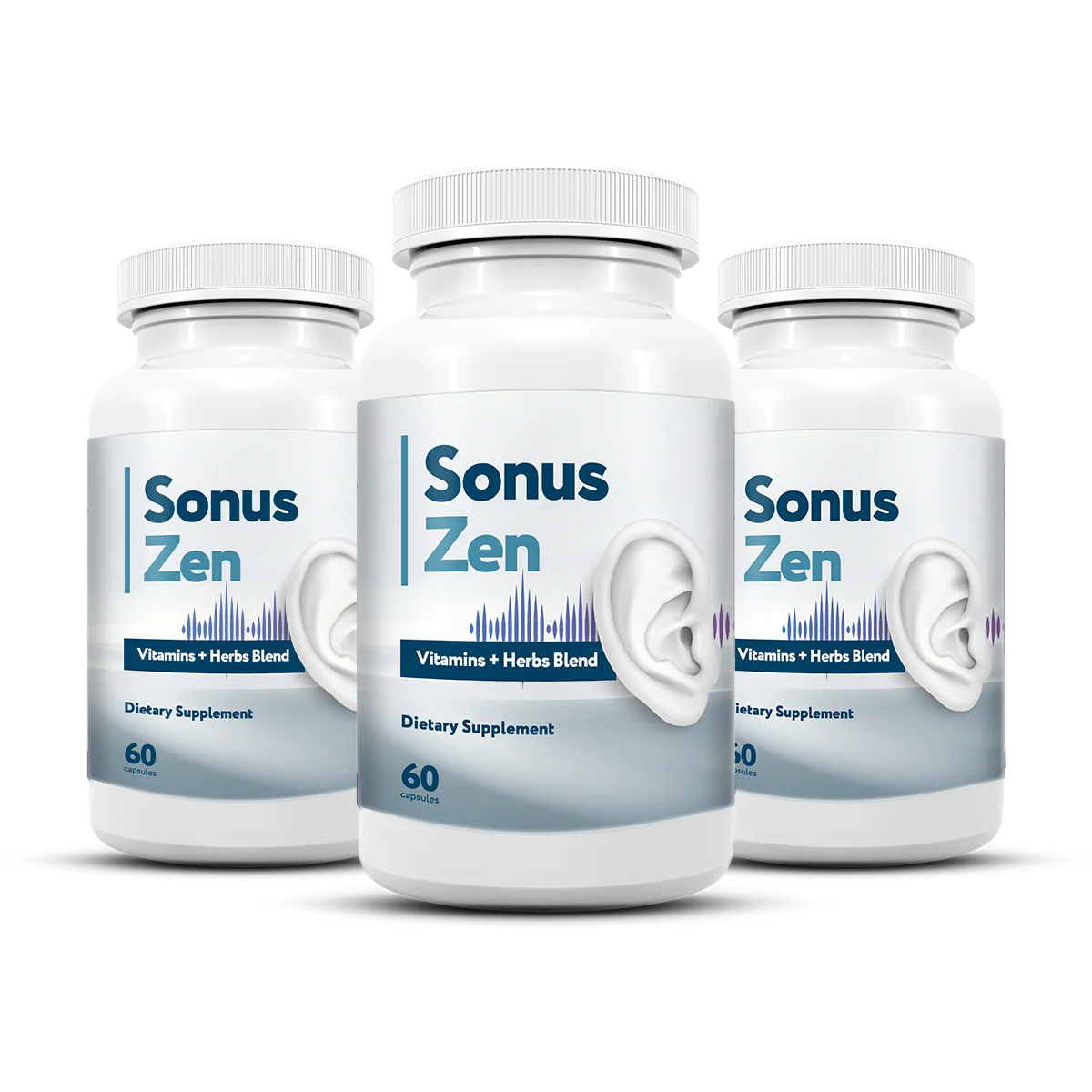
If you have spent an evening comparing tabs, you already know the problem: every product page claims to be the best tinnitus supplement on the market, and none of them agrees on why. This 2026 buyer's guide does something different. Instead of handing you a ranked list to trust on faith, it hands you the framework the good reviewers use privately — three tests that sort a shelf of tinnitus supplements faster than any five-star badge, and that you can run yourself in a couple of minutes per label.
Two facts anchor everything that follows. First, there is no FDA-approved cure for tinnitus, and no dietary supplement has been shown to switch the ringing off. Second, despite that, a small group of ingredients does have real research behind it, and the difference between a thoughtful formula and an expensive placebo is almost always visible on the label if you know where to look.
What "best" should actually mean when you buy a tinnitus supplement
"Best" is a slippery word in this category because the brands get to define it. Left to marketing, it means the boldest promise, the most reviews, or the biggest ingredient count on the front of the box. None of those predict whether a product will do anything. A more useful definition of the best tinnitus supplement is boringly practical: it is the formula whose claims you can verify, whose doses match the research it leans on, and whose refund policy lets you test it without gambling.
That reframing matters because tinnitus is unusually vulnerable to the placebo effect. Ringing is rated on subjective scales that drift with sleep, stress and attention, so trials routinely show meaningful improvement in the placebo group. A brand can therefore collect a wall of glowing testimonials while the active ingredients do very little. Verifiability is your only defence, and it lives in three places.
The three tests that separate a good tinnitus supplement from an expensive one
Test 1: Per-ingredient dose transparency
Open the Supplement Facts panel and look for a milligram or microgram figure next to every active ingredient. A formula that reads "Proprietary Auditory Blend 480 mg" and then lists eight herbs underneath has told you the combined weight and hidden the only number that matters: how much of each you actually get. Proprietary blends are legal and common, but for a category where the doses in the research are specific, they are a red flag. If a label will not tell you it contains, say, 240 mg of standardised ginkgo, you have to assume it contains a sprinkle chosen for the label rather than the study.
Full disclosure is the single strongest signal a brand can send. It is also the cheapest thing to fake with a blend, which is exactly why the brands hiding numbers tend to be the ones whose numbers would disappoint you.
Test 2: Third-party testing
Supplements are regulated after they reach the market, not before, so what is in the bottle is the manufacturer's responsibility. Independent testing — a certificate of analysis, or verification through a recognised third-party lab — is how a brand proves the panel is honest and that the product is free of heavy metals and contaminants. Manufacturing in an FDA-registered, GMP-certified facility is the baseline; a willingness to show test results is the upgrade. If you cannot find any evidence of testing, you are trusting a label with no auditor.
Test 3: Refund terms you can actually use
Because these ingredients act gradually, a fair evaluation takes two to three months. That means the refund window is not fine print — it is the feature that makes the product testable. A 60-day guarantee on a supplement that needs 90 days to show anything is a trap. Look for a money-back guarantee long enough to cover a real trial, and read whether it applies to opened bottles, because "unopened only" defeats the entire purpose.
Before the shortlist: new, worsening, one-sided or pulsatile tinnitus — or ringing with hearing loss, dizziness or ear pain — is a reason to see a clinician, not to shop. Supplements are for general auditory support, never a substitute for a diagnosis.
Run the three tests on a fully disclosed label
SonusZen publishes each ingredient with its amount and stands behind the purchase with a money-back guarantee — the two things this guide tells you to demand first. See the current panel and pack options before you compare anything else.
See the Official SonusZen OfferThe six most-studied tinnitus ingredients, and what the research really says
Once a label passes the disclosure test, you can judge the contents. Six inputs carry the bulk of the human research, and knowing the realistic ceiling of each keeps you from overpaying for the rest.
Ginkgo biloba (standardised extract, EGb 761). The most-studied botanical for tinnitus, usually credited to improved microcirculation. Results are genuinely mixed: some trials report modest benefit, pooled reviews are unconvinced, and the effect on people whose main complaint is tinnitus is weak. The standardised EGb 761 extract at roughly 120–240 mg daily is the version that was actually tested, so a label listing "ginkgo" with no standardisation or dose is not implying the same thing.
Magnesium. Involved in nerve signalling and studied mostly for noise-related and stress-related hearing symptoms. The evidence is preliminary and the samples small, but magnesium is inexpensive, well tolerated within limits, and mechanistically reasonable.
Zinc. Concentrated in cochlear tissue and trialled repeatedly for tinnitus, most convincingly in people who were low in zinc to begin with. Across the general population the tinnitus results are weak. It also has a firm 40 mg adult upper limit and can deplete copper over time — a detail we cover in depth in our guide to zinc dosing, safety and the studies for hearing.
Vitamin B-12. A genuine deficiency can produce neurological symptoms, and some observational work links low B-12 to tinnitus, so correcting a shortfall is worthwhile. Mega-dosing beyond that has no shown tinnitus benefit; the high percentages of Daily Value you see are normal for B-12 rather than a sign of potency.
Melatonin. Its best-supported role is sleep, and since tinnitus is far more distressing at night and when you are tired, better sleep can make the ringing easier to live with even if the sound itself is unchanged. That is a real, honest benefit — support for comfort, not a silencing effect.
Lemon bioflavonoids (lipoflavonoids). A long-marketed combination for ear health, typically paired with B-vitamins. Popularity is high; rigorous evidence is thin. It is not harmful, but it should not be the reason you choose a formula.
Where SonusZen lands as a multi-ingredient pick
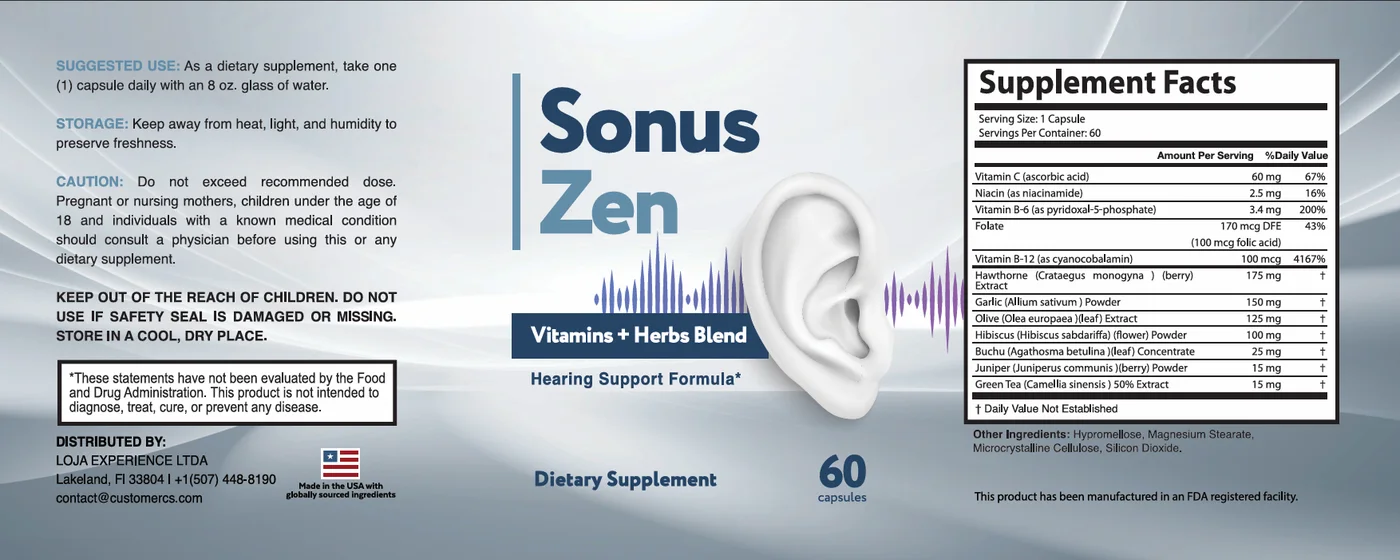
Applied honestly, SonusZen scores well on the criteria that are hardest to fake and mid-pack on the one nobody can escape. It is a disclosed, multi-ingredient formula built around circulation botanicals and B-vitamins, manufactured in an FDA-registered, GMP-certified US facility, and sold with a money-back guarantee — so it clears the transparency and refund tests that eliminate a surprising share of the shelf. What it cannot do, and does not claim to do, is cure tinnitus; like every product here, its honest ceiling is support for auditory comfort and circulation.
The right way to use a guide like this is to run the same scorecard across your whole shortlist. If you want to see how the framework plays out against a specific rival, our side-by-side of Why Is Every Hearing Supplement Full of Blood-Pressure Herbs? works through the disclosure question in detail, and our evidence-based SonusZen review of what it can and cannot do sets realistic expectations before you commit to a multi-month pack.
The 2026 buyer's scorecard
| Criterion | What "best" looks like | Red flag | Weight |
|---|---|---|---|
| Dose disclosure | Every active in mg/mcg | Proprietary blend total only | High |
| Ingredient choice | Ginkgo, magnesium, zinc, B-12, melatonin | Exotic fillers, no research | High |
| Third-party testing | COA / independent lab | No testing mentioned | High |
| Manufacturing | FDA-registered, GMP facility | Unstated origin | Medium |
| Guarantee | 60–90+ days, opened bottles | Short window, unopened only | High |
| Claims | "Supports auditory comfort" | "Cures" / "silences" ringing | Disqualifying |
Three myths that cost tinnitus shoppers money
"More ingredients means a better formula." Not if the extra ingredients are there to lengthen the label. A twenty-item blend split into token amounts is weaker than a focused formula that doses five inputs properly. Count disclosed milligrams, not bullet points.
"A four-figure %DV means it is stronger." For B-12 in particular, huge Daily Value percentages are routine and not a danger sign — we explain exactly why in our breakdown of what a 4,167% Daily Value of B-12 actually means. Percentage is not potency, and potency is not proof.
"If it worked in reviews, it will work for me." Testimonials capture the placebo response, natural fluctuation and the small real effects all mixed together, with the failures quietly absent. That is why the refund window matters more than the review wall: it lets you generate your own data.
Supplements are one lever, not the whole machine
The most important sentence in any honest tinnitus buyer's guide is this: supplements work best as a supporting player. The interventions with the strongest evidence for making tinnitus easier to live with are behavioural and environmental — sound therapy that masks or retrains attention away from the ringing, stress and sleep management, protecting your ears from further noise, and cognitive approaches that reduce the distress the sound causes. A formula like SonusZen fits around that foundation. Bought as a magic bullet, even a well-dosed product will disappoint; bought as one consistent input alongside sound and stress work, it has a fair chance to earn its place.
Frequently asked questions
What is the best tinnitus supplement in 2026?
There is no single winner, because no supplement cures tinnitus and no product has been proven best in a head-to-head trial. The best tinnitus supplement for you is the one that discloses every ingredient's dose in milligrams, shows third-party testing, uses ingredients with real research behind them at sensible amounts, and offers a genuine refund window so you can evaluate it without financial risk. SonusZen is worth shortlisting on the disclosure and guarantee criteria, but you should still compare its panel against every rival before buying.
Do tinnitus supplements actually reduce ear ringing?
The honest answer is that the evidence is modest and mixed. Ginkgo, magnesium, zinc, B-12 and melatonin each have some supporting research, but the effects reported are generally small, gradual and inconsistent across studies, and much of tinnitus improvement in trials also appears in placebo groups. A supplement may support auditory comfort for some people, but no product has been shown to reliably silence ringing, and any brand claiming to do so is over-promising.
What ingredients should a good tinnitus supplement contain?
The six most-studied inputs are standardised ginkgo biloba (EGb 761), magnesium, zinc, vitamin B-12, melatonin and lemon bioflavonoids (lipoflavonoids). A good formula lists each of these with its own milligram or microgram amount rather than burying them inside a proprietary blend, keeps doses within safe upper limits, and does not pad the label with token amounts that could never match the studies being implied.
How long before a tinnitus supplement shows results?
Plan on a full 60 to 90 days before you judge anything. These ingredients act on nutrient status and circulation, which shift over weeks rather than days, and the trials that reported any benefit ran for months, not a week. Any product promising to quiet ringing within a few days is describing marketing, not how the ingredients behave.
Scientific references
Compare SonusZen against your shortlist
Every ingredient with its amount, the manufacturing and testing details, the pack pricing and the money-back guarantee — on the official store rather than an unauthorised marketplace listing.
Check Availability and Pack OptionsRelated reading
SonusZen Reviews: Does It Really Work?
An evidence-based look at the formula, realistic expectations and the 60–90 day evaluation window.
Vitamins for Tinnitus: Which Ones Actually Help
B-12, folate and the antioxidant vitamins weighed against the trials, deficiency versus dose.