Vitamin D and Ear Ringing: What the Evidence Shows
Quick Answer: Is There a Link Between Vitamin D and Ear Ringing?
Low vitamin D does not cause ear ringing, but the two are linked. Observational studies repeatedly find that people with tinnitus, especially severe or constant ringing, are more likely to be vitamin D deficient. Small trials suggest correcting a genuine deficiency can ease symptoms in some people, though not in those already replete.
- Linked, not causal: deficiency is one contributing factor, not the sole trigger of the ringing.
- Deficiency-dependent: the reported benefit shows up in people who were actually low to begin with.
- Test first: check your 25-OH vitamin D level before any high-dose supplement.
If your ears ring and you have read that a cheap vitamin might quiet them, the idea is understandably appealing. The connection between vitamin D and ear ringing is one of the more credible leads in the whole tinnitus-and-nutrition space, because it rests on something concrete: repeated observations that people with persistent ringing tend to run lower on vitamin D than people whose ears are quiet. That is a genuine signal. It is also frequently oversold, and the gap between “associated with” and “fixed by” is exactly where money gets wasted.
This article walks through what the vitamin D and tinnitus research actually found, why a deficiency could plausibly touch the auditory system, whether topping up your levels does anything for the ringing, and the one blood test that decides whether any of this applies to you. The goal is to leave you able to tell an honest lead from a hopeful one.
What the vitamin D and ear ringing research actually shows
Start with the strongest and most repeated finding, because it is the reason this topic exists at all. Across several observational studies, groups of people with tinnitus were tested for 25-hydroxyvitamin D — the storage form measured in a blood test — and compared against people without tinnitus. The tinnitus groups were, on average, more likely to be deficient. In some of that work the association went a step further: the people with the lowest vitamin D tended to report the loudest or most distressing ringing, which is the kind of dose-response pattern researchers take more seriously than a flat yes-or-no difference.
That is the good news, and it is worth stating clearly rather than hedging into meaninglessness. There is a real, repeated association between low vitamin D status and tinnitus. But an association is a starting point, not a verdict, and three limits keep it honest.
These are cross-sectional snapshots. Most of the studies measured vitamin D and tinnitus at the same moment. That design cannot tell you which came first. Low vitamin D might contribute to ringing — or people bothered by tinnitus might go outside less, sleep worse and eat differently, all of which drag vitamin D down. The arrow could point either way, or both.
Vitamin D deficiency is extremely common. A large share of adults test low, especially in winter, at higher latitudes, with darker skin, or with more body fat. When a deficiency is that widespread, it will show up alongside almost any common complaint, tinnitus included, without necessarily driving it.
Tinnitus has many roads in. Noise exposure, age-related hearing loss, earwax, medications, jaw and neck problems, blood-pressure issues and stress all feed the same symptom. Vitamin D, at most, is one contributor sitting in a crowded room.
The vitamin D and tinnitus link is one of the better-supported associations in hearing nutrition — and it is still only an association. Treating it as a proven cause is where the marketing gets ahead of the science.
Why a vitamin D shortfall could plausibly reach the ear
An association is far more believable when there is a mechanism that could explain it, and here there genuinely is one. Vitamin D is not only a bone nutrient. Its receptor is found in tissues throughout the body, including structures of the inner ear, and it plays a role in calcium handling and in normal nerve and immune function. Calcium signalling is central to how the cochlea's hair cells and the auditory nerve transmit sound, so a nutrient tied to calcium regulation is not a random suspect.
There is also a specific, well-described way vitamin D can affect hearing structures: in some people, chronic deficiency is linked to demineralisation of the tiny bones and dense bone of the otic capsule around the inner ear. That is a documented pathway, not a marketing invention. None of this proves that fixing vitamin D quiets ringing — a plausible mechanism and a proven treatment are different things — but it does explain why researchers keep returning to this nutrient rather than dismissing the association as coincidence.
The honest framing is this: vitamin D supports the normal function of nerve and bone tissue that the auditory system depends on. When a deficiency drags that support below a healthy baseline, correcting it restores something the body was actually missing. That is a very different claim from “vitamin D silences tinnitus,” and keeping the two apart is the whole point.
See how a hearing formula handles vitamin D and its cofactors
Before you stack single vitamins, it is worth seeing what a combined hearing-support formula already includes — and at what amounts — so you are comparing a real label against the research rather than the sales copy.
See the Official SonusZen OfferDoes correcting vitamin D actually reduce ear ringing?
This is the question that matters, and the honest answer has two parts depending on where you start.
In people who were genuinely deficient, a handful of small studies have reported that restoring vitamin D to a normal range was followed by lower tinnitus severity scores — the ringing became less loud or less intrusive for a portion of participants. Those are encouraging results, and they fit the mechanism above: you were short of something the auditory system uses, you replaced it, and a subset of people improved.
But the same body of work carries heavy caveats. The trials are small, several lack a placebo group, and tinnitus is measured on subjective scales that drift for many reasons, so improvement in an unblinded study is hard to attribute to the vitamin alone. Crucially, the benefit appears deficiency-dependent. If your 25-OH vitamin D is already in a healthy range, there is no good evidence that pushing it higher does anything for the ringing. You cannot correct a deficiency you do not have, and beyond the point of adequacy the extra capsule is just risk without a return.
So the realistic expectation is narrow but not nothing: if you are deficient, bringing your level back to normal is worth doing for many reasons, and there is a reasonable chance it helps the ringing for some people. If you are not deficient, vitamin D is unlikely to be your answer, and it is better to look elsewhere. That pattern — strong biology, promising but thin human trials, benefit concentrated in the deficient — recurs across the category, and we walk through it nutrient by nutrient in our evidence review of supplements for hearing loss.
The number that decides everything: test 25-OH vitamin D first
Everything above hinges on one measurement, so it deserves its own section. The only way to know whether the vitamin D and ear ringing link applies to you is a 25-hydroxyvitamin D blood test. It is inexpensive, widely available, and it answers the exact question that matters: are you actually low, or do you just assume you are because the internet says everyone is?
Testing first does three useful things. It confirms whether there is a deficiency to correct at all — and if there is not, it saves you from chasing a dead end. It gives you a baseline number, so if you do supplement and retest in a few months, you can see whether your level and your symptoms moved together. And it keeps you safe, because it prevents you from starting a high dose you do not need.
That safety point is not a formality. Vitamin D is fat-soluble, which means the body stores it rather than flushing the excess the way it does with vitamin C. Take large amounts you did not require, for long enough, and it can accumulate and raise blood calcium to levels that cause real harm. The people most likely to overdo it are precisely the ones who never tested and reasoned “if a little helps, more must help faster.” With vitamin D, that instinct is wrong and occasionally dangerous.
Medical note: new tinnitus in one ear only, ringing with dizziness, or a sudden drop in hearing needs a clinician promptly, not a supplement. Nothing here is medical advice, and no vitamin should replace a hearing assessment or the guidance of the professional who ordered your blood test.
How much vitamin D — and why more is not better
There is no tinnitus dose of vitamin D, because vitamin D does not have a symptom target; it has a blood-level target. The aim is to bring 25-OH vitamin D into a normal range and hold it there, and the amount that takes varies from person to person. Many adults maintain adequacy on somewhere around 1,000 to 2,000 IU per day, but body weight, baseline level, sun exposure, skin tone and gut absorption all shift the number. Someone starting from a genuine deficiency may need a higher, time-limited correction dose set by a clinician, followed by a smaller maintenance amount — which is exactly the kind of plan a blood test makes possible and guesswork does not.
This is why the “mega-dose” culture around vitamin D is misguided for tinnitus. Once you are replete, additional vitamin D has no further deficiency to fix, so the plausible benefit to the ringing flattens out while the accumulation risk keeps climbing. The sweet spot is adequacy, not maximum. A formula that lists a sensible amount of vitamin D is behaving more responsibly than one boasting a five-figure IU number designed to look impressive on a label.
Vitamin D rarely works alone: magnesium and the cofactor question
Vitamin D does not operate in isolation, and this is where combination formulas can make more sense than a lone capsule. Magnesium is a cofactor in several of the enzymatic steps that activate vitamin D, which is part of why magnesium status and vitamin D status tend to travel together, and why someone low in one is often low in the other. Magnesium is also independently interesting for the auditory system as a nutrient involved in nerve signalling — a topic we cover, with realistic doses and timelines, in our guide to Your Supplement Says 4,167% Daily Value of B-12. Should You Worry?.

The B-vitamins belong in the same conversation. Low B12 has its own association with tinnitus and hearing thresholds, and it is another deficiency that is easy to miss and worth ruling out; we lay out that evidence in our piece on the Best Tinnitus Supplement 2026: A Buyer's Guide That Reads the Label For You. The practical takeaway is that if you are the kind of person who is low in vitamin D, you are statistically more likely to be short on these cofactors too — which is an argument for testing broadly and, if several run low, correcting them together rather than fixating on a single nutrient.
Three myths worth clearing up
“Everyone is deficient, so I can skip the test and just megadose.” Deficiency is common, but not universal, and the fat-soluble storage problem makes untested high-dosing a genuinely bad idea. The test costs little and settles the question. Skipping it to save a few dollars can cost far more if you push your level too high for months.
“If my vitamin D is normal, taking more will still help the ringing.” There is no evidence for this, and a clear mechanistic reason to doubt it: the plausible benefit comes from correcting a shortfall, and you cannot correct one that is not there. Normal-to-higher does not buy you a quieter ear; it buys you accumulation risk.
“I get plenty of sun, so I cannot be low.” Sun-driven vitamin D depends on latitude, season, time of day, skin tone, sunscreen and how much skin is actually exposed, and huge numbers of people who feel they get “enough” sun still test deficient — office workers and those in northern winters especially. Perceived sun exposure is a poor substitute for a blood number. Test rather than assume, in either direction.
Where a formula like SonusZen fits
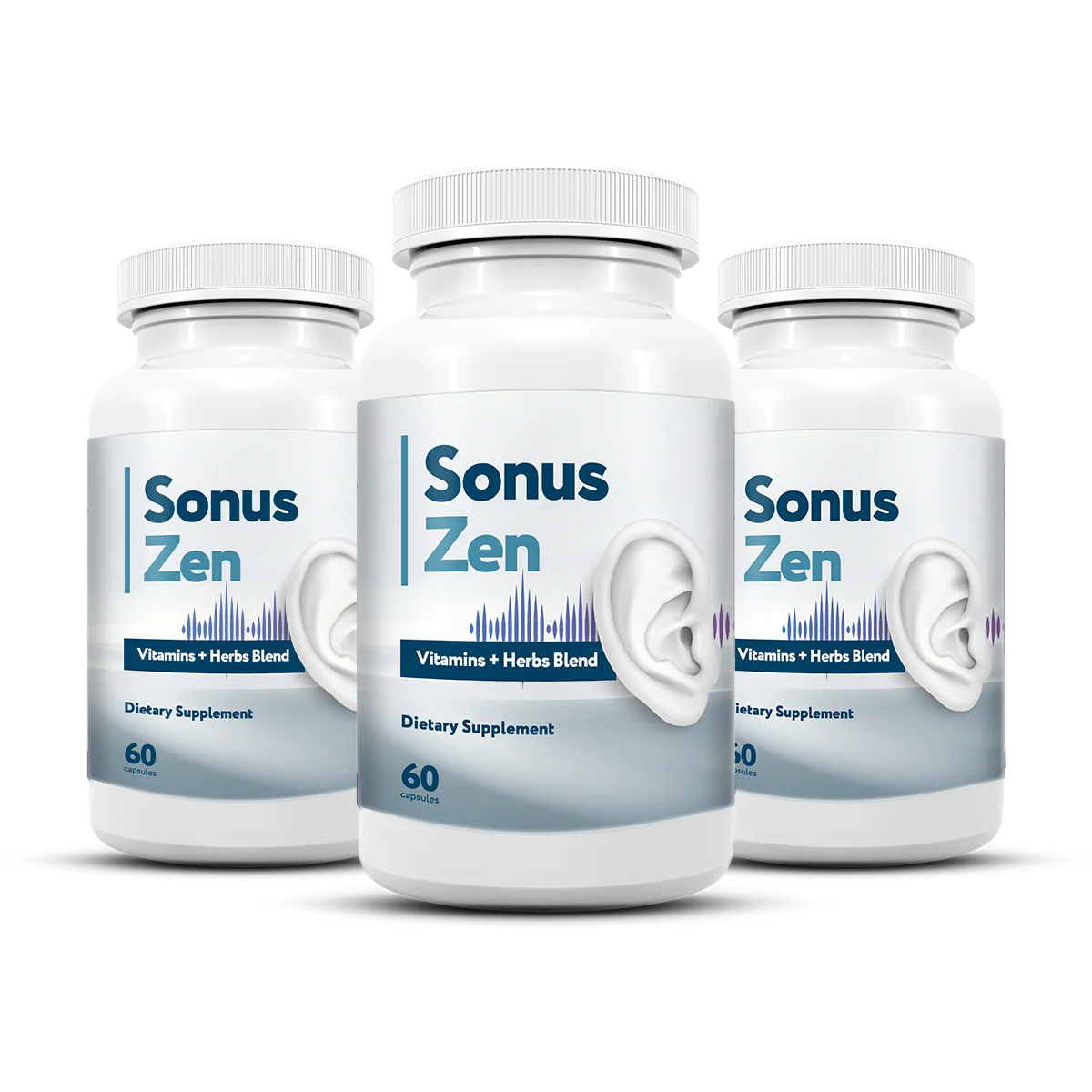
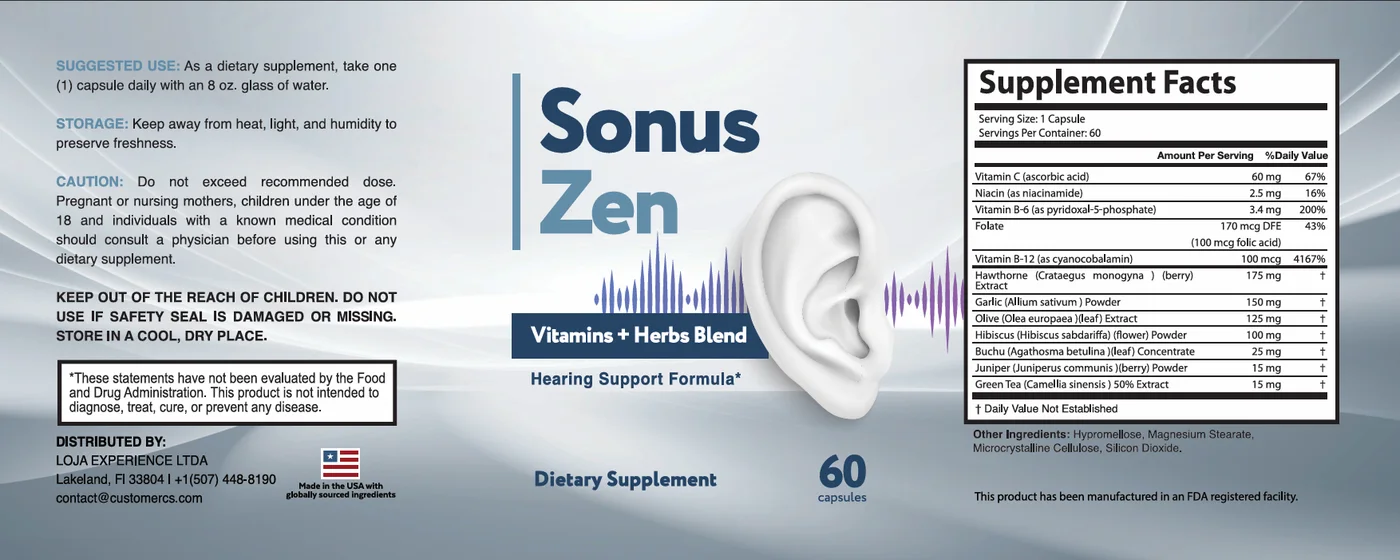
If you decide to address vitamin D as part of a broader hearing-support routine, the sensible question to ask of any product is the same one we ask of every label: does it deliver the nutrient in a range that matches the research, and does it respect the cofactor relationships rather than dumping one vitamin in isolation? A combined formula such as SonusZen pairs vitamins with botanicals and cofactor minerals, which is a reasonable structure on paper. Whether the specific amounts match what you personally need still depends on your test results — a formula supports adequacy, it does not replace the blood work that tells you what adequacy requires for you.
Read the panel the way you would read the research: an amount you can check beats an adjective you cannot. If the vitamin D figure sits in a sensible range and the label is honest about being support rather than a cure, it is doing its job. Match it against your own 25-OH vitamin D number and you will know in one glance whether it fills a real gap or a marketing one.
Frequently asked questions
Can low vitamin D cause tinnitus?
Low vitamin D has not been shown to cause tinnitus. What the research shows is an association: several observational studies report that people with tinnitus, and especially those with more severe or persistent ringing, are more likely to have low 25-OH vitamin D than people without it. Association is not causation, and a deficiency is one contributing factor among many rather than a single cause.
Does taking vitamin D reduce ear ringing?
In people who were genuinely deficient, a few small studies have reported improvements in tinnitus severity scores after their levels were restored to normal. The effect appears to be deficiency-dependent: if your vitamin D is already adequate, adding more has not been shown to quiet the ringing, and higher doses carry their own risks. Benefit tracks correcting a shortfall, not loading up beyond it.
How much vitamin D should I take for tinnitus?
There is no tinnitus-specific dose. The goal is a normal blood level, not a large number on a bottle. Many adults maintain adequacy on 1,000 to 2,000 IU daily, but the right amount depends on your tested starting level, body weight, sun exposure and absorption. Correcting a documented deficiency sometimes needs a higher short-term dose set by a clinician, then a maintenance amount afterwards.
Should I get my vitamin D tested before supplementing?
For anything above a routine maintenance dose, yes. A 25-OH vitamin D blood test tells you whether you are actually low, which is the whole question, and gives you a baseline to compare against later. Testing matters most before high-dose supplementation, because vitamin D is fat-soluble and can build up to harmful levels if you take large amounts you never needed.
Scientific references
- NIH Office of Dietary Supplements — Vitamin D fact sheet for health professionals
- NIDCD — Tinnitus
- NIDCD — Sudden Deafness (sudden sensorineural hearing loss)
- NIH Office of Dietary Supplements — Magnesium fact sheet for health professionals
- PubMed — studies on vitamin D and tinnitus
- Mayo Clinic — Tinnitus: symptoms and causes
Check the vitamin D amount on the SonusZen panel
See every ingredient with its amount from the label, how the vitamin D and cofactor doses compare to the research, and where to buy SonusZen through the official store rather than an unauthorised marketplace listing.
Check Availability and Pack Options